
Introduction
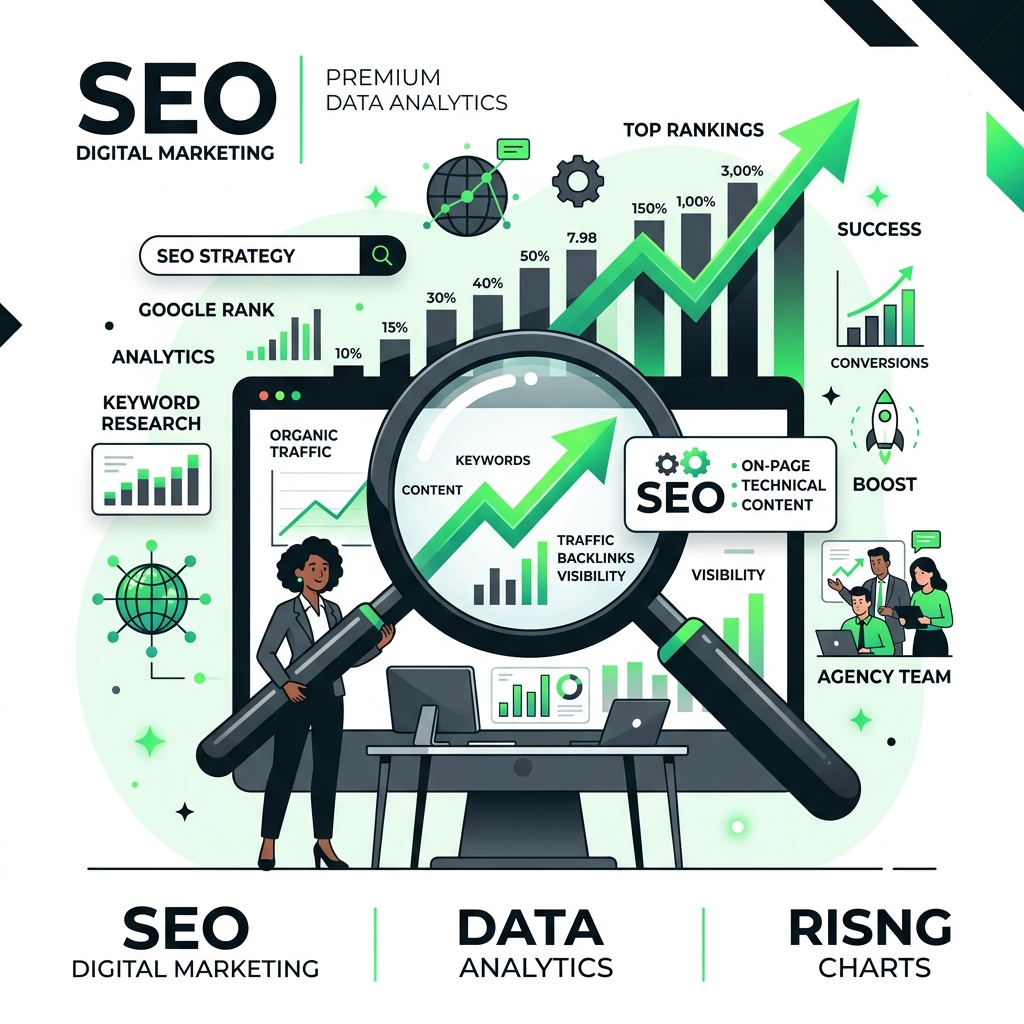
In the highly competitive digital landscape of 2026, simply having a website is no longer enough. To drive consistent, high-quality traffic, businesses must rely on Search Engine Optimization (SEO). Effective SEO ensures that your brand appears at the top of search engine results when potential customers are actively looking for the products or services you offer. In this comprehensive guide, we will break down the top SEO strategies that are proven to generate sustainable online business growth.
1. Keyword Research: The Foundation of SEO
Keyword research is the process of discovering the exact phrases and terms that your target audience enters into search engines. This is the cornerstone of any successful SEO campaign. Without proper keyword research, you might end up optimizing for terms that no one is searching for, or terms that are too competitive to rank for.
- Search Intent: Understand whether the user is looking for information, looking to navigate to a specific site, or ready to make a purchase.
- Long-Tail Keywords: Focus on highly specific, longer phrases that often have less competition and higher conversion rates.
- Competitor Analysis: Analyze what keywords your top competitors are ranking for and identify content gaps in your own strategy.
2. On-Page SEO: Optimizing Your Content
On-page SEO refers to the practice of optimizing individual web pages to rank higher and earn more relevant traffic. This involves aligning page-level elements with your target keywords.
Key on-page elements include:
- Title Tags & Meta Descriptions: Craft compelling, keyword-rich titles and descriptions to improve your Click-Through Rate (CTR) from the search results page.
- Header Tags (H1, H2, H3): Structure your content logically. Ensure your primary keyword is in the H1 tag, and use H2/H3 tags to organize subtopics.
- Image Optimization: Compress images for faster loading and include descriptive Alt Text to help search engines understand the image content.
3. Technical SEO: Enhancing Crawlability and Indexation
Even the best content won't rank if search engines can't find, crawl, or index your site. Technical SEO ensures your website meets the technical requirements of modern search engines.
- Site Speed: Page speed is a critical ranking factor. Optimize code, leverage browser caching, and use Content Delivery Networks (CDNs).
- Mobile Friendliness: With mobile-first indexing, your site must provide a flawless experience on smartphones and tablets.
- XML Sitemaps & Robots.txt: Guide search engines to your most important pages and block them from crawling irrelevant or sensitive directories.
4. Content Marketing: Fueling Your SEO Engine
Search engines reward websites that consistently publish high-quality, relevant content. Content marketing and SEO go hand-in-hand.
By creating informative blog posts, comprehensive guides, and engaging videos, you not only provide value to your audience but also signal to search engines that your site is an authoritative resource in your industry. Focus on answering the specific questions your target audience is asking.
5. Backlinks: Building Authority and Trust
Backlinks (links from other websites to yours) act as "votes of confidence" in the eyes of search engines. A strong backlink profile is one of the most powerful ranking factors.
- Quality over Quantity: A few links from high-authority, relevant websites are worth much more than hundreds of links from low-quality spam sites.
- Guest Posting: Write valuable articles for other reputable blogs in your industry to earn authoritative links.
- Digital PR: Create highly shareable, newsworthy content that naturally attracts links from journalists and industry publications.
The Benefits of a Strong SEO Strategy
Investing in SEO provides long-term, compounding returns. The primary benefits include:
- Increased Organic Traffic: Consistent flow of visitors without paying for every click.
- Higher ROI: Compared to traditional paid advertising, organic traffic has a significantly higher Return on Investment over time.
- Enhanced Brand Trust: Users naturally trust websites that appear at the top of Google results.
- Better User Experience: Many SEO practices (like faster load times and better site structure) directly improve the overall user experience.
Conclusion
SEO is not a one-time project; it is an ongoing process of optimization, monitoring, and adaptation. By implementing strong keyword research, perfecting your on-page elements, ensuring technical health, and building authoritative backlinks, you set your business up for sustainable, long-term growth in the digital marketplace. Start optimizing today, and watch your online presence soar.